Basics
Extended Warranties for Electric Vehicles: What You Need to Know
Fewer moving parts doesn't mean fewer claims. Here's what an EV extended warranty actually needs to cover.

By Marcus Hale
Published 30 March 2026 · Updated 24 June 2026 · 6 min read
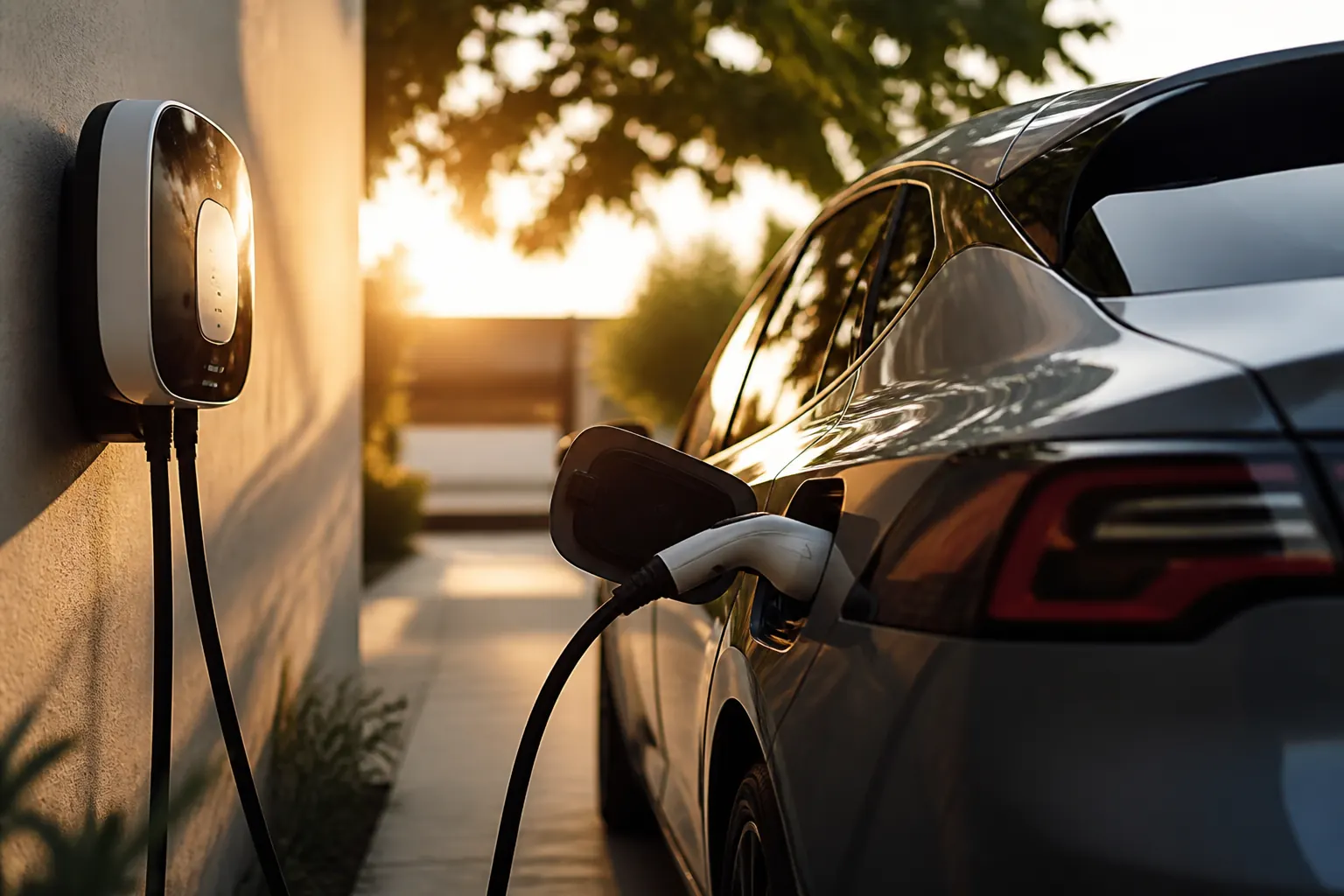
Electric vehicles change the math on extended warranties in ways most buyers don't think about until they're three years into ownership. There are fewer moving parts, which is true. There are also a handful of failure modes that didn't exist on gas cars and that cost more to fix when they happen.
What the factory warranty already covers

Every EV sold in the US comes with a federally mandated 8-year/100,000-mile battery and drive-unit warranty (longer in California for some manufacturers). That's substantially better than the 3-year/36,000-mile bumper-to-bumper you'd get on a gas car for the expensive parts.
The bumper-to-bumper itself is usually 4 years/50,000 miles on most EVs — Tesla, Rivian, Lucid, and the legacy manufacturers all hover around this range. That covers the non-powertrain electrical and electronic components: infotainment, ADAS sensors, power windows, HVAC.
So when an EV extended warranty is offered, what it's actually extending depends on what's still in coverage. The battery is usually still covered by the factory for years after the bumper-to-bumper expires. The extended plan is mostly extending the non-powertrain coverage.
The battery question
This is where buyers focus, and rightly so. An out-of-warranty battery replacement on a mainstream EV runs $15,000 to $25,000 installed. On a luxury EV, $30,000+. That's the most expensive single component on the car by an order of magnitude.
Here's what to look for in any EV extended warranty:
- Does it cover the high-voltage battery pack? Many do not, even when they appear to offer "powertrain" coverage on an EV.
- What constitutes a "covered" battery failure? Cell-level failures? Capacity degradation below a threshold? Module replacement vs full pack replacement?
- What's the labor allowance? Battery service requires special tooling and certified technicians — the shop rate matters.
- Is there a depreciation schedule? Some plans pay only a percentage of replacement cost based on vehicle age.
Plans that explicitly cover battery cells, modules, and the battery management system, at the dealer labor rate, with no age-based depreciation, are rare and expensive. Plans that exclude the battery entirely are the most common.
What actually breaks on an EV
From the warranty data I've reviewed, the most common out-of-pocket repairs on EVs after the factory bumper-to-bumper expires are:
- 12-volt battery (yes, EVs still have a small 12-volt battery and it dies routinely)
- Infotainment and central display failures (these are expensive — sometimes $2,000+)
- HVAC components (heat pumps in particular are expensive to repair)
- ADAS cameras and radar units
- Charging port assembly
- Door handles (the flush-mounted designs fail more than traditional handles)
- Drive unit electronics (covered by federal warranty for 8 years, but past that, these are five-figure repairs)
Most of these are not the battery. A solid extended warranty for an EV needs to cover infotainment, HVAC, ADAS, and the drive electronics — not just the battery.
Third-party options for EVs

The third-party warranty market for EVs is still immature. Many of the older administrators (CARCHEX, Endurance) added EV coverage relatively recently and the contracts are noticeably less generous than their gas-car equivalents. Some specialty providers (Xcelerate is one example) focus specifically on EVs and have better coverage of the electric-specific components.
Whatever you do, read the actual coverage schedule. The marketing pages will tell you "EVs are covered" but the schedule might exclude the battery, the BMS, the drive unit, and the charging system — at which point you're paying for infotainment coverage on a car where the infotainment is the cheapest thing on the failure list.
Is it worth it?
For most EV owners through year 6 or 7, no — the factory coverage is already excellent on the expensive parts. After year 7, when the bumper-to-bumper is long gone and the battery warranty is approaching its end, the calculation shifts. The risk profile of an out-of-warranty EV is dominated by a small number of very expensive failures, which is the scenario insurance is actually good for.
If you plan to own an EV well past the factory warranty, look for coverage that explicitly includes the high-voltage battery, the BMS, the drive unit, and the charging system — and price it accordingly. A plan that covers everything except the four most expensive things is not worth buying at any price.
From the shop floor: what actually fails on EVs
I've worked on enough EVs now to have opinions. The good news for owners: the high-cost failures people fear — battery pack, drive motors — are rare in the first 100,000 miles and usually covered by the federal 8/100 battery warranty anyway. The bad news: there's a whole category of medium-cost failures that catch people off guard because they're newer to the platform.
Onboard chargers. We've replaced three in the last year on out-of-warranty EVs — $1,800 to $2,600 a piece. The car charges fine on Level 1 but won't accept Level 2 or DC fast charge. Extended coverage on these is a real win if it's included; some third-party plans specifically exclude charging electronics.
HVAC heat pumps. Modern EVs use heat pumps instead of resistive heaters for efficiency. When the heat pump fails, you're looking at $1,400 to $2,200 in parts and another $600 in labor because the entire dash sometimes has to come apart. I've watched two of these denied by plans that listed "climate control" as covered but excluded heat pump assemblies specifically.
12-volt systems. Yes, EVs still have a regular 12-volt battery, and it dies the same way every other battery does. Most extended plans exclude consumables like batteries. Fine. But the DC-to-DC converter that charges the 12-volt from the high-voltage pack? That's covered on most exclusionary plans and runs $900 to $1,500 to replace when it fails.
If you're buying coverage on an EV, the question to ask the broker isn't "is the battery covered." The answer is almost always no, and that's actually fine. The right question is: "are onboard chargers, DC-to-DC converters, and heat pump assemblies named as covered components?" Get the answer in writing before you sign.
Key takeaways
- Federal law mandates 8-year/100k-mile battery coverage on every EV sold in the US.
- An EV extended warranty mostly extends non-powertrain coverage after year 4 or 5.
- Many extended plans exclude the high-voltage battery — read the schedule carefully.
- Infotainment, HVAC, and ADAS are the most common real-world EV out-of-pocket repairs.
Frequently asked questions
- Does Tesla sell an extended warranty?
- Tesla offers an Extended Service Agreement on some vehicles, but the program has been on and off and the terms vary. As of 2026, availability is limited and you should call to confirm for your specific model.
- Are EV repairs really more expensive?
- Some are, some aren't. Routine maintenance is much cheaper (no oil, no transmission service). But major electrical and battery work is expensive, and the network of shops that can do it is smaller.
- Will an extended warranty cover battery degradation?
- Almost never. Capacity loss is treated as wear, not a failure, unless the loss is dramatic and clearly cell-related. The factory battery warranty has a specific capacity threshold (usually 70%).
References & further reading
Continue reading
Related guides

Extended Car Warranty: What It Actually Covers in 2026
Before you compare quotes, you need to know what type of coverage you're actually being sold. Here's the difference between the four main contract structures.
10 min read · Updated 24 Jun 2026

Powertrain vs Bumper-to-Bumper: Which Warranty Do You Actually Need?
Two phrases that get thrown around at every car dealership, and almost nobody explains what they actually mean for your wallet when something breaks.
9 min read · Updated 22 Jun 2026

What Is a Vehicle Service Contract? (And Why It's Not a Warranty)
Almost every 'extended warranty' on the market is a vehicle service contract — a separate product, regulated differently, sold by a different company. Here's what that means for you.
9 min read · Updated 20 Jun 2026