Pricing
Extended Warranty Cost by Vehicle Type: What You'll Actually Pay
Pricing varies by far more than mileage. The class of vehicle you drive determines whether the same coverage costs $1,500 or $4,200.

By Marcus Hale
Published 12 June 2026 · Updated 23 June 2026 · 6 min read
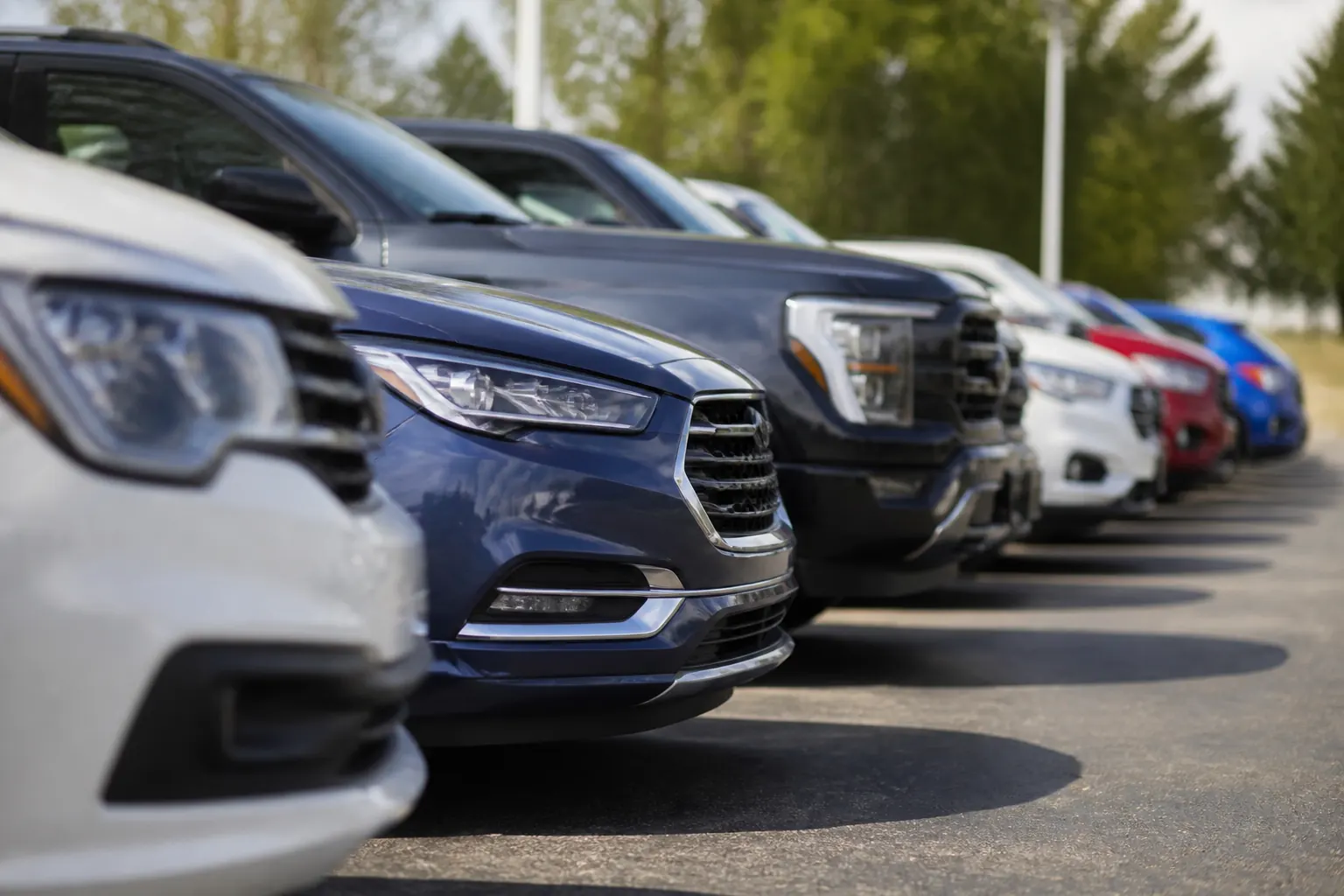
Two vehicles in the same garage, both with 45,000 miles on the clock, can quote extended coverage at radically different prices. The variable is rarely what people assume — it's the class of vehicle, the reliability data for the platform, and the underlying cost of typical repairs.
Compact and midsize sedans

Mainstream sedans from Japanese and Korean brands (Camry, Accord, Sonata, Forte, Civic, Corolla) sit at the cheapest end of the market. Powertrain coverage for 5 additional years typically runs $700 to $1,400. Exclusionary coverage on the same vehicles runs $1,600 to $2,800.
The reason is simple actuarial math. These vehicles have low claim frequencies and low average claim amounts. The administrator's exposure is small, so the premium is small. If you're driving a reliable mainstream sedan, the cost-benefit on extended coverage is the closest call you'll find.
SUVs and trucks
Mainstream SUVs and trucks (CR-V, RAV4, Highlander, Pilot, F-150, Silverado) run roughly 20-40% higher than equivalent sedans on the same coverage. Powertrain coverage runs $1,000 to $1,800; exclusionary coverage $2,000 to $3,500.
Trucks specifically push higher because of the complexity of 4WD systems, larger drivetrains, and the higher repair costs of larger components. A transmission rebuild on a half-ton truck is genuinely more expensive than the same job on a sedan. The premium reflects that.
Three-row SUVs with all-wheel drive sit at the top of this category. Pilot, Highlander, Pathfinder with AWD can quote $2,800 to $4,000 for exclusionary coverage despite being mainstream brands.
Luxury and European
This is where pricing gets serious. German sedans and SUVs (BMW, Mercedes-Benz, Audi, Porsche), British luxury (Range Rover, Jaguar), and Italian platforms (Maserati, Alfa Romeo) all price extended coverage at premiums that reflect their service costs.
Powertrain coverage on a 5-year-old BMW with 50,000 miles can run $2,400 to $3,800. Exclusionary coverage on the same vehicle: $4,000 to $6,500. Range Rovers and Porsche models price even higher; some administrators decline to write coverage on certain Land Rover platforms at all because the claim history is so bad.
The expensive coverage isn't a markup — it's the math working as intended. A repair on a 5-Series that costs $2,400 at the BMW dealer would be $1,100 at a Toyota dealer. The administrator is pricing for the realistic cost of paying that claim.
Electric vehicles

EVs are a developing market for extended warranties. Battery packs are usually covered separately under the manufacturer's federally mandated 8-year/100,000-mile battery warranty, so most third-party plans exclude the battery from coverage entirely and price accordingly.
What you're covering on an EV: motor, inverter, charging system, climate control, electronics. Coverage tends to run $1,800 to $3,200 for exclusionary plans on mainstream EVs (Bolt, Leaf, ID.4), and higher for premium EVs (Tesla Model S/X, Lucid, Polestar).
EV coverage is also more limited in who underwrites it. Several major administrators won't write EV coverage at all yet. Confirm at quote time that the administrator covers your specific vehicle.
From the shop floor: why the same quote looks different
A customer I'll call Ben came in last spring with two printed quotes on the same coverage, same term, same deductible. One was $2,180 on his 2020 Camry. The other was $4,640 on his wife's 2019 X5. He genuinely thought the second broker was scamming him. He wasn't.
I walked him through it on the back of a parts invoice. The week before, we'd replaced a thermostat housing on a 3.0L BMW inline-six: $890 in parts, 4.1 hours of labor, total ticket $1,520. The same job on his Camry — different design, plastic housing, accessible from the top — was $310 out the door. Same failure category, totally different exposure for whoever's writing the contract.
Then I showed him the timing chain guides we'd replaced on a similar-vintage 5-Series two months earlier: $4,200, and the customer's manufacturer warranty had expired six months prior. That single job alone is more than his Camry quote. Administrators see those repair tickets too, and they price for them.
One thing that genuinely surprised him: the X5 quote was actually a fair number relative to the risk. The broker wasn't padding it. I've seen Range Rover quotes north of $7,000 for five years of exclusionary coverage and watched the same vehicles eat $9,000 in repairs over the same window. Whether the warranty is "worth it" on a German SUV depends almost entirely on whether you're the unlucky owner or the lucky one — and the only way to hedge that uncertainty is to either buy the coverage or self-insure with a real savings buffer.
Ben ended up buying coverage on the X5 and skipping it on the Camry. I think that's roughly the right call for most households with one mainstream car and one European one. The mainstream car is your floor of reliability; the European car is the one that can ruin a month.
Key takeaways
- Mainstream sedan coverage runs $700-$2,800; SUVs and trucks 20-40% higher.
- European luxury commonly quotes $4,000-$6,500 for exclusionary coverage on a 5-year-old vehicle.
- EV coverage excludes the battery pack (covered by federal mandate) and runs $1,800-$3,200 mainstream.
- The premium gap between vehicle classes reflects real differences in repair cost and claim frequency.
Frequently asked questions
- Why is European coverage so much more expensive?
- Because European parts and labor genuinely cost more. The administrator is pricing the expected claims, not marking up arbitrarily.
- Does EV coverage include the battery?
- Usually no. The battery is covered under the manufacturer's 8-year/100,000-mile warranty by federal mandate, and third-party plans exclude it to avoid duplicating coverage.
- Are trucks really 30% more than sedans?
- On equivalent coverage from the same provider, yes — sometimes more. Drivetrain complexity and component cost drive the difference.
References & further reading
Continue reading
Related guides

What Extended Car Warranties Actually Cost (And How Dealers Mark Them Up)
Extended warranty pricing is one of the least transparent corners of car buying. Here's what's realistic and how the F&I markup actually works.
8 min read · Updated 15 Jun 2026

How Much Should an Extended Car Warranty Actually Cost?
There's no published price list because pricing is intentionally opaque. Here's the rough math that lets you tell a fair quote from an inflated one.
8 min read · Updated 15 Jun 2026

Financing an Extended Warranty Into Your Car Loan: Don't
$60 a month doesn't sound like much. Over 72 months at the rate on your car loan, it's a much bigger number than the warranty's actual price.
7 min read · Updated 14 Jun 2026