Basics
GAP Insurance vs Extended Warranty: What's the Difference?
Two products sold at the same desk, often confused, that have nothing to do with each other. Here's the difference, in plain English.

By Marcus Hale
Published 26 March 2026 · Updated 24 June 2026 · 5 min read
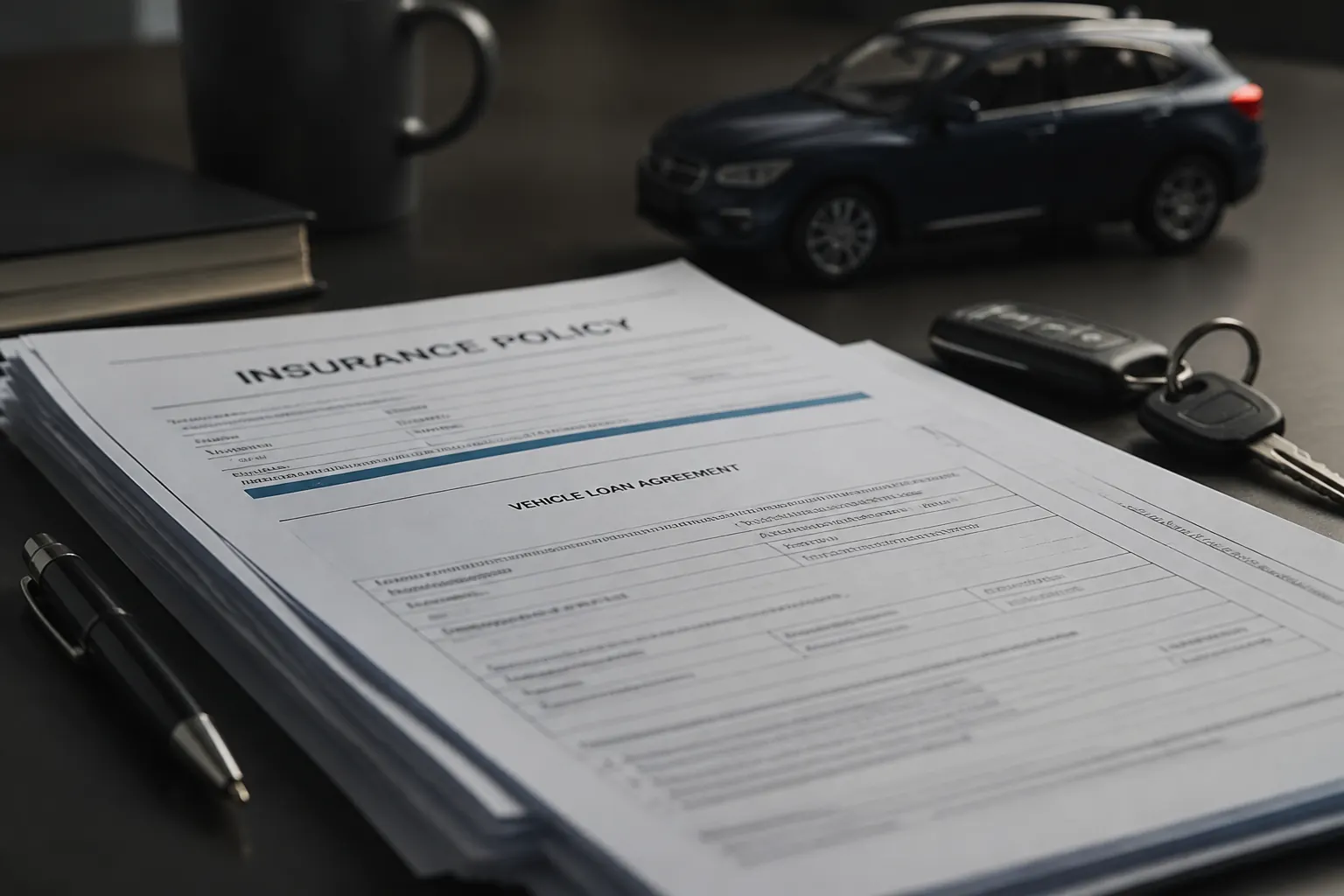
Walk into the F&I office of any new car dealer and you'll be offered both GAP insurance and an extended warranty in the same breath, often bundled into one monthly payment that makes them feel like the same product. They are not. They cover completely different events, are regulated differently, and the right answer for one has nothing to do with the right answer for the other.
Two different problems

GAP insurance solves a financial problem: you owe more on the car than the car is worth, and something destroys the car. Extended warranties solve a mechanical problem: a part on your car fails and you don't want to pay for the repair. Different events, different products.
GAP insurance, explained
"GAP" stands for Guaranteed Asset Protection. It pays the difference between what you owe on your auto loan and what your auto insurance pays out if the car is totaled or stolen and not recovered.
Here's a typical scenario. You finance a $42,000 SUV with zero down. Eighteen months later, you owe $38,500 on it. Someone runs a red light and totals the car. Your auto insurance values the totaled vehicle at $31,000 (depreciation has been brutal). Without GAP, you owe your lender $7,500 for a car you don't have. With GAP, the gap is paid by the policy.
GAP makes sense when you have low or no down payment, a long loan term (60-plus months), or you drive a vehicle that depreciates quickly. It doesn't make sense if you put 20% or more down, financed a short term, or are leasing a car where GAP is often included.
Dealers mark GAP up heavily — $700 to $900 is common at the F&I desk. The same coverage from your auto insurance carrier is often $20 to $40 per year, or roughly $100 to $200 over the life of the loan.
Extended warranty, explained
An extended warranty (technically a vehicle service contract in most cases) pays for the repair of covered mechanical components after the manufacturer's warranty expires. It has nothing to do with your loan, your car's value, or whether the car is totaled. If your transmission fails on a paid-off ten-year-old car, the extended warranty pays for the repair. If the car is totaled in an accident, the extended warranty pays nothing — that's the auto insurance's job.
Do you need both?

The questions are completely separate, so analyze them independently.
For GAP: What's your down payment? Loan term? Vehicle depreciation rate? If you put less than 20% down on a long loan, GAP is probably a good idea. Get it from your auto insurance company, not the dealer.
For an extended warranty: How long will you own the car? How complex is the vehicle? Can you absorb a $3,000 surprise repair? If you're keeping a complex vehicle for the long haul and a major repair would hurt, a warranty might pay off. Get it from a reputable third-party administrator after pricing the same plan independently.
It's common to need GAP and not need an extended warranty (new car with a great factory warranty, low down payment), or to need a warranty and not need GAP (used car bought with cash, but the engine is complex). The answers don't correlate.
Where to buy each one
GAP: Your auto insurance company, almost always. Call your agent and ask to add GAP to your policy. Most carriers (Geico, State Farm, Progressive, Allstate) offer it for $20 to $40 per year. Some credit unions also offer it bundled with the loan at a flat fee that's competitive.
Extended warranty: Either the manufacturer (best if available on your make), a reputable third-party administrator (CARCHEX, Endurance, Olive, etc., evaluated on their financial strength and reviews), or your insurance company's mechanical breakdown insurance product (Geico and a few others offer this and it's often the cheapest option). Almost never the dealer's F&I desk on the day you buy.
The common thread for both: get prices from at least two outside sources before signing anything in the F&I office. The convenience of buying at the dealer is rarely worth the markup.
From the shop floor: the customer who needed both and only had one
A young guy — call him Devin — leased a 2021 Tesla Model Y and bought aggressive coverage at delivery: extended service contract, prepaid maintenance, the works. The one thing he passed on at the F&I desk: GAP insurance. He told the finance manager he had "good insurance" and didn't need it.
Eighteen months later he hydroplaned on I-95, totaled the car, and learned the hard way that good insurance pays actual cash value, not what you owe. The car was worth $38,400; his loan balance was $46,700. GAP would have covered the $8,300 difference. Instead, his insurance check went to the lender and he was left writing checks for a car he couldn't drive.
The extended warranty he did buy? Refunded prorated, about $1,400 back. Helpful, but nowhere close to filling the hole.
The point I try to get across to customers is that these two products solve completely different problems. The extended warranty protects you against mechanical failure during ownership. GAP protects you against a total loss while you're underwater on the loan. You can need one, the other, both, or neither depending on your situation — but you should make those decisions independently. Don't let an F&I manager bundle them into one conversation and don't let yourself assume one covers the other. They don't overlap at all.
Key takeaways
- GAP insurance covers the loan-to-value gap if your car is totaled — it's a finance product.
- Extended warranties cover mechanical failure — they're a repair product.
- Whether you need one has nothing to do with whether you need the other.
- GAP is best bought from your auto insurer; warranties from a third-party administrator.
Frequently asked questions
- Does GAP insurance cover the deductible?
- Some plans do, some don't. Read the policy. The better GAP plans waive the deductible up to a cap (often $1,000).
- Do I need GAP if I'm leasing?
- Almost every lease includes GAP automatically. Confirm it's in your lease contract, but you usually don't need to buy it separately.
- Can I buy GAP after I drive off the lot?
- Yes — most auto insurance carriers will add it any time. The dealer is not your only option, despite what they'll tell you.
References & further reading
Continue reading
Related guides

Extended Car Warranty: What It Actually Covers in 2026
Before you compare quotes, you need to know what type of coverage you're actually being sold. Here's the difference between the four main contract structures.
10 min read · Updated 24 Jun 2026

Powertrain vs Bumper-to-Bumper: Which Warranty Do You Actually Need?
Two phrases that get thrown around at every car dealership, and almost nobody explains what they actually mean for your wallet when something breaks.
9 min read · Updated 22 Jun 2026

What Is a Vehicle Service Contract? (And Why It's Not a Warranty)
Almost every 'extended warranty' on the market is a vehicle service contract — a separate product, regulated differently, sold by a different company. Here's what that means for you.
9 min read · Updated 20 Jun 2026