Buying
Is an Extended Warranty Worth It on a Car With Over 100,000 Miles?
Past 100k, the math changes. Premiums climb, covered components shrink, and the odds of a denied claim go up. Here's how I'd think about it.

By Marcus Hale
Published 30 May 2026 · Updated 24 June 2026 · 7 min read
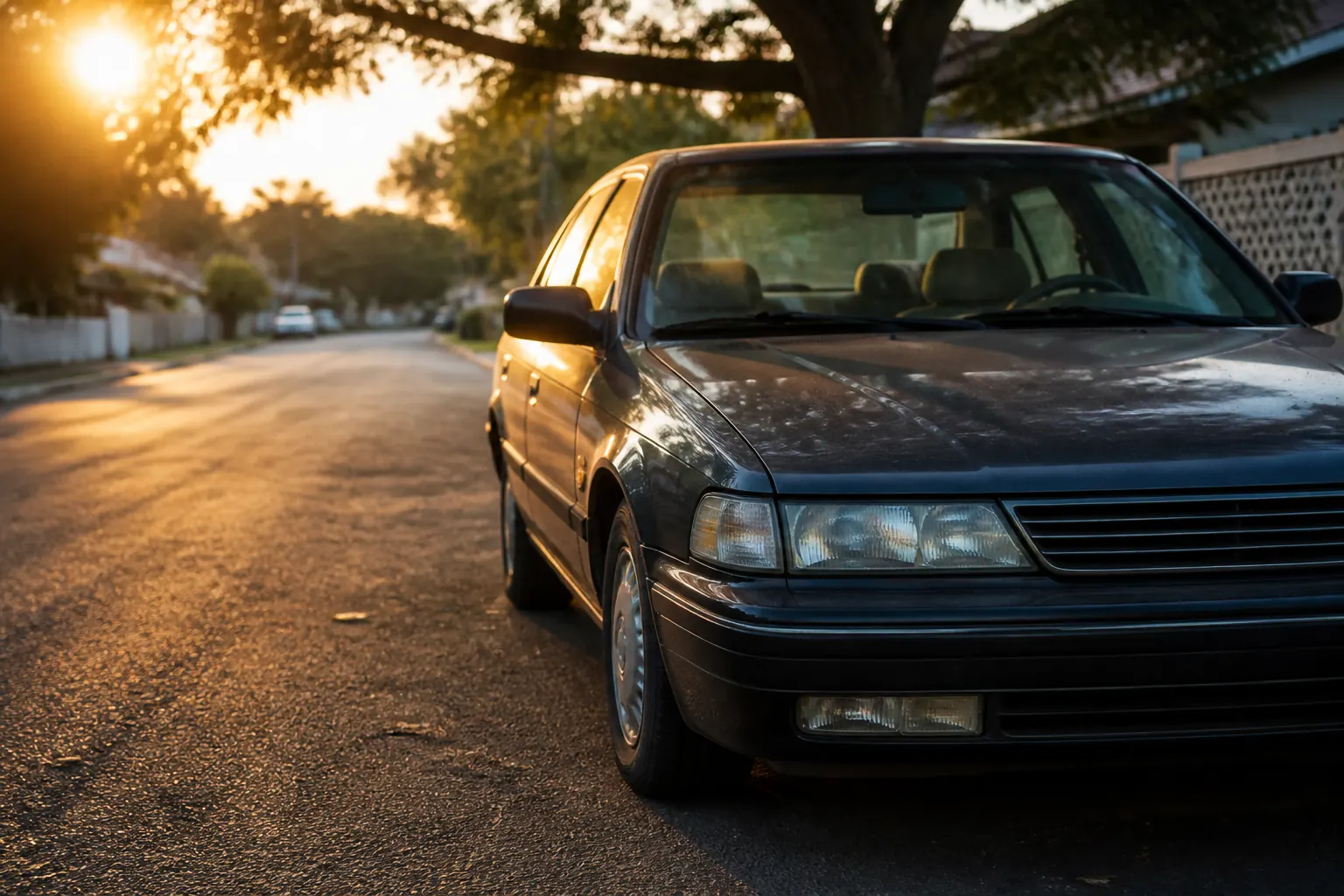
I've had this conversation a hundred times over the service counter. Someone with a 2014 something-or-other rolls in at 118,000 miles, gets a $2,800 estimate, and asks whether they should have bought an extended warranty last year. The honest answer is: maybe, but probably not the one they were quoted.
What changes after 100k

Three things happen the moment your odometer rolls past 100,000. First, your premium roughly doubles compared to the same plan at 60,000 miles. Second, the available coverage tiers shrink — most administrators stop offering their top exclusionary plans and only sell you stated-component or powertrain. Third, the inspection requirements get stricter. Some plans want a pre-inspection or a recent dealer service record before they'll write the contract.
Your covered list shrinks
Read a high-mileage plan side-by-side with the same company's standard plan and you'll see entire categories quietly disappear: air conditioning components, electronics, suspension. What's left is usually engine internals, transmission internals, drive axles, and a handful of seals. That's not nothing — a transmission swap is still $4,500 — but it's a much narrower bet than buyers think they're making.
Running the actual math
Here's a real example from a customer last spring. A 2015 SUV at 112k miles. Quoted $3,400 for four years/48,000 miles of stated-component coverage with a $200 deductible. Over that term, breaking even meant filing about $3,800 in approved claims (premium + deductibles). Possible? Yes. Likely? On a vehicle with documented maintenance and no current symptoms, the honest probability is maybe 40%. He'd be better off putting the $3,400 in a savings account and self-insuring.
The math flips if the vehicle has a known expensive failure mode. Certain platforms — early direct-injection engines with carbon-buildup issues, dual-clutch transmissions with weak mechatronics, specific turbo applications — have failure rates high enough that coverage is a genuine hedge. Look up your specific year and engine on owner forums before you decide.
When high-mileage coverage works
Coverage on a 100k+ vehicle makes sense in three situations. One: you own a model with a documented expensive failure pattern that hasn't hit you yet. Two: you can't comfortably absorb a $4,000 repair and you'd be forced to sell the car or take on debt. Three: you're keeping the car at least four more years and have records showing diligent maintenance, which makes claim approval far more likely.
When to just self-insure
Skip it if the car is a high-reliability nameplate (well-maintained Toyota, Honda, Lexus, Mazda) with no known issues. Skip it if you have emergency savings that could cover a major repair without panic. And skip it if the only contract you can get is from a company you can't verify — at 100k miles, the temptation to buy a cheap plan from a robocaller is high, and those plans deny claims at rates that border on fraud.
Shop floor: when high-mileage coverage paid for itself in six months
A customer with a 2014 Ford F-150 EcoBoost at 142,000 miles asked about extended coverage. I was honest with her — at that mileage, on that engine (the 3.5L EcoBoost has a known timing chain issue around 120-160k), no reputable administrator was going to give her broad coverage cheaply. The quotes came back $2,800-$3,400 for two years of powertrain-only coverage with a 30-day waiting period.
She signed up with a stated-component plan that specifically listed the timing chain assembly. Five months later — past the waiting period, thankfully — the timing chain stretched and triggered a cascade of fault codes. The repair was $4,600 including the timing chain kit, phasers, oil pump, and labor. The administrator covered $4,200; she paid the $200 deductible and $200 for a couple of related items the contract excluded. Net: she paid about $3,000 in premium plus $400 out of pocket on a $4,600 repair. Came out $1,200 ahead in the first half-year.
That doesn't mean high-mileage coverage always pays off. Most of the time it doesn't — the premiums are high, the waiting periods are long, the exclusions are wider. But on platforms with known expensive failure modes (Ford EcoBoost timing chains, BMW high-pressure fuel pumps, certain CVT transmissions), a stated-component plan that specifically lists the failure-prone components can be one of the best value plays in extended warranties. Don't buy generic high-mileage coverage; buy coverage that names the part you're actually worried about.
Key takeaways
- High-mileage premiums roughly double and coverage tiers shrink.
- Most plans past 100k cover engine, transmission, and drive axles only.
- Run the break-even math — premium plus deductibles vs realistic claim odds.
- Coverage genuinely helps on platforms with known expensive failure patterns.
- Self-insure with a savings account if you own a high-reliability nameplate.
Frequently asked questions
- Can I get bumper-to-bumper coverage past 100k?
- Rarely. Most administrators only sell stated-component or powertrain plans on vehicles over 100,000 miles.
- Do I need a pre-inspection?
- Some administrators require one on higher-mileage vehicles, especially for any plan above basic powertrain.
References & further reading
Continue reading
Related guides

Extended Car Warranty: What It Actually Covers in 2026
Before you compare quotes, you need to know what type of coverage you're actually being sold. Here's the difference between the four main contract structures.
10 min read · Updated 24 Jun 2026

When an Extended Car Warranty Is Worth It (And When to Walk Away)
Extended coverage genuinely pays off in a narrow set of situations. Here's the framework I use to decide, plus the scripts for declining at the F&I desk.
8 min read · Updated 10 Jun 2026

Should You Buy an Extended Warranty at the Dealership? (Usually Not)
The dealer isn't the only place that sells coverage on your car, and it's almost never the cheapest. Here's how to tell when their offer is worth taking anyway.
8 min read · Updated 13 Jun 2026