Buying
Buying an Extended Warranty on a Used Car from a Private Seller
Buying private-party means no F&I desk pushing coverage on you. It also means you have to organize protection yourself — and the window for doing it cleanly is short.

By Marcus Hale
Published 13 June 2026 · Updated 23 June 2026 · 5 min read
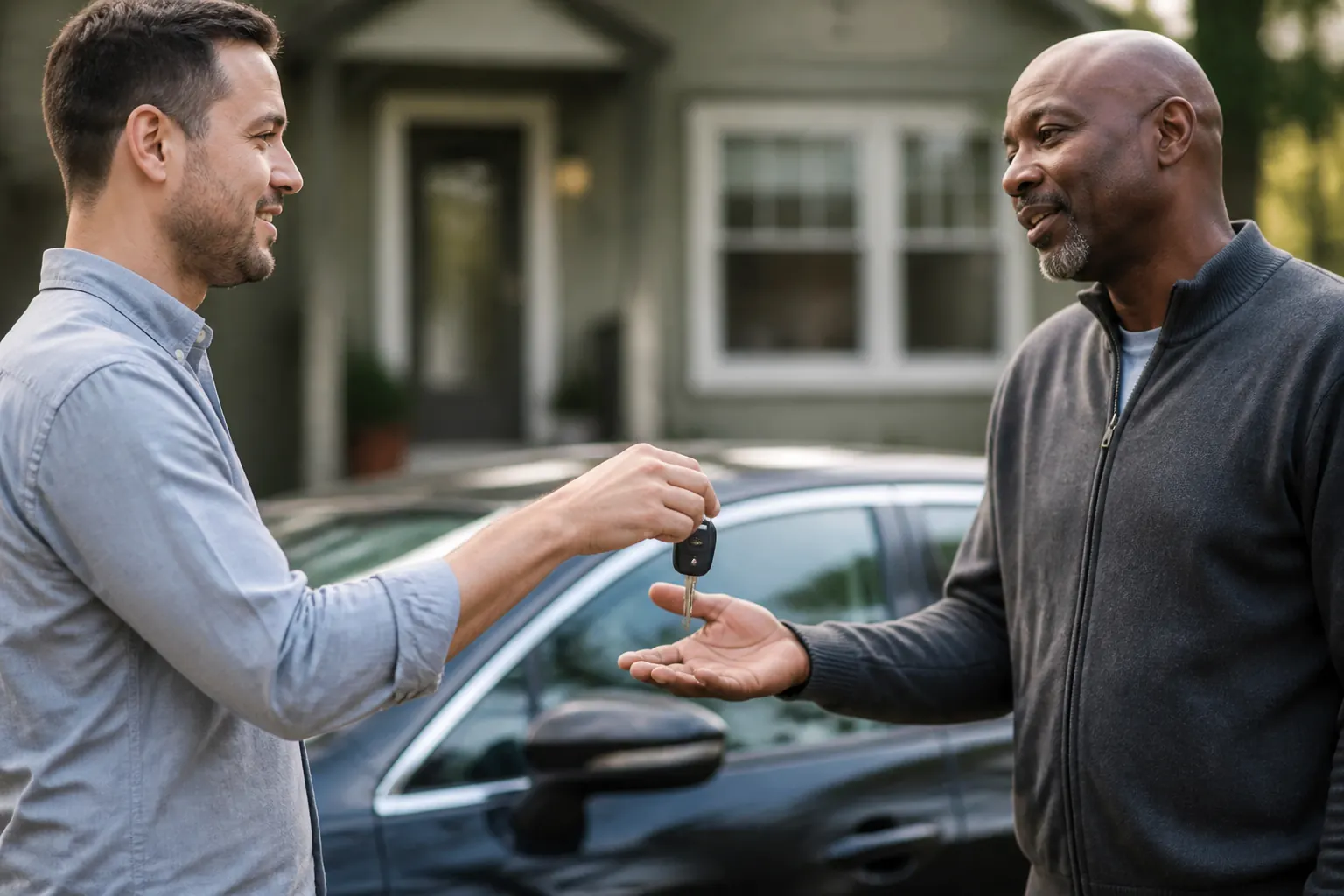
Buying from a private seller saves money — usually a meaningful amount over the same vehicle at a dealer. But it also strips out the convenience layer where the dealer hands you financing, registration paperwork, and the extended warranty option in one shot. If you want coverage on a private-party purchase, you organize it yourself, and the timing affects what's available.
Pre-purchase inspection comes first
Before you sign the title, before you write the check, before anything else: pay an independent shop to inspect the vehicle. $125 to $200 for a good shop. They'll put it on a lift, scan for codes, check fluid conditions, look at brake and tire wear, and tell you whether anything obvious is wrong.
This is non-negotiable on a private-party purchase. The inspection report serves two purposes: it tells you whether the car is actually as described, and it establishes a baseline for any future warranty claim. If the administrator argues a failure is pre-existing, a pre-purchase inspection report dated before your contract is the cleanest evidence you have that the condition didn't exist when coverage began.
Qualifying for coverage
Third-party administrators write coverage on vehicles regardless of how you bought them. Manufacturer extended plans usually require you to enroll within a window of original delivery or before factory coverage expires; private-party purchases sometimes fall outside that window depending on age and mileage.
The qualifying conditions are roughly the same as any extended coverage: vehicle age, current mileage, make and model. Some administrators will not write coverage on a vehicle with a salvage title or branded title. Some won't cover vehicles with prior reported odometer discrepancies. Pull a vehicle history report before quoting — surprises at the underwriting stage waste time.
Where to actually buy
Three viable channels for private-party buyers. Independent brokers (CARCHEX, Olive, Toco, AutoPom) quote third-party administrators and don't require you to have bought through a dealer. The application is online, the quote is real, and you pay either directly or through a financing arrangement with the administrator.
Direct from the administrator — some companies (Endurance, Olive) sell their own coverage directly and accept private-party purchases without intermediary.
Through your bank or credit union — many credit unions offer mechanical breakdown insurance, which is a similar product structured as insurance rather than a service contract. The terms can be different (sometimes better, sometimes worse), and the eligibility rules are clean for any vehicle the credit union will lend on. Worth getting a quote.
Timing matters
The cheapest coverage is on the lowest-mileage version of any vehicle. If you buy a private-party car at 75,000 miles, get your quote at 75,000 miles, not at 90,000 after you've put a year on it. Premiums climb with mileage faster than the actuarial curve might suggest, and waiting "to see how the car runs" costs you real money on the premium.
The waiting period applies normally. Activate the contract, wait the 30 days and 1,000 miles, and only then is coverage in effect for new failures. If anything started going wrong during the inspection or the first few weeks of ownership, file under the seller's responsibility or eat the repair — don't try to push a borderline pre-existing claim through. It rarely works and it sets a tone with the administrator that hurts future claims.
From the shop floor: the inspection that paid for itself ten times over
A woman named Priya brought in a 2018 Acura MDX she was a day away from buying off a neighbor for $19,500. Clean Carfax, one owner, looked great in the driveway. Pre-purchase inspection took us about 90 minutes and a $165 invoice.
We found a slow coolant weep at the timing cover, two engine mounts collapsed, and rear differential fluid that came out looking like chocolate milk. None of it was visible without the vehicle on a lift. The repair estimate to make the truck right: $3,400. She went back to the seller, negotiated $2,500 off, and on top of that bought a 5-year exclusionary contract within the same week.
Eight months later her differential failed for real. Because she had the inspection report dated before her warranty contract, and the contract was activated cleanly with her in the owner field, the administrator paid the claim — $3,100 in parts and labor — with no fight. The adjuster actually thanked her for the documentation; he said most denial fights start because the buyer can't prove the condition wasn't pre-existing.
I tell every private-party buyer the same thing now: the inspection isn't really about deciding whether to buy the car. It's about creating a paper trail that protects every dollar you spend after you sign the title. Skip it and you're paying full price for a car you can't defend in a claim.
Key takeaways
- Always get a pre-purchase inspection before signing — it doubles as evidence against pre-existing condition denials.
- Buy coverage as soon as you take ownership; premiums climb meaningfully with each additional 10,000 miles.
- Independent brokers, direct administrators, and credit unions are all viable channels.
- Vehicles with salvage or branded titles can be hard or impossible to cover.
Frequently asked questions
- Can I get an extended warranty if I bought my car from Craigslist?
- Yes, from most third-party administrators. The vehicle has to meet their eligibility rules — clean title, within age and mileage caps — but the source of the sale doesn't matter.
- Do I have to inspect first?
- You don't have to, but you should. The cost of the inspection is small compared to the value of having documented baseline condition if a future claim is ever disputed.
- Will the seller's existing warranty transfer to me?
- If they had a transferable third-party warranty and the transfer is completed correctly with the administrator, yes. Most contracts allow it for a small fee.
References & further reading
Continue reading
Related guides

When an Extended Car Warranty Is Worth It (And When to Walk Away)
Extended coverage genuinely pays off in a narrow set of situations. Here's the framework I use to decide, plus the scripts for declining at the F&I desk.
8 min read · Updated 10 Jun 2026

Should You Buy an Extended Warranty at the Dealership? (Usually Not)
The dealer isn't the only place that sells coverage on your car, and it's almost never the cheapest. Here's how to tell when their offer is worth taking anyway.
8 min read · Updated 13 Jun 2026
Can You Transfer an Extended Warranty When You Sell the Car?
A transferable warranty can add hundreds of dollars to your resale price — but only if you know how to actually move it to the buyer.
6 min read · Updated 10 Jun 2026