Claims
How Maintenance Records Protect Your Warranty Claim
If you can't prove the oil was changed, the contract assumes it wasn't. Here's the documentation that actually protects you.

By Marcus Hale
Published 18 March 2026 · Updated 24 June 2026 · 6 min read
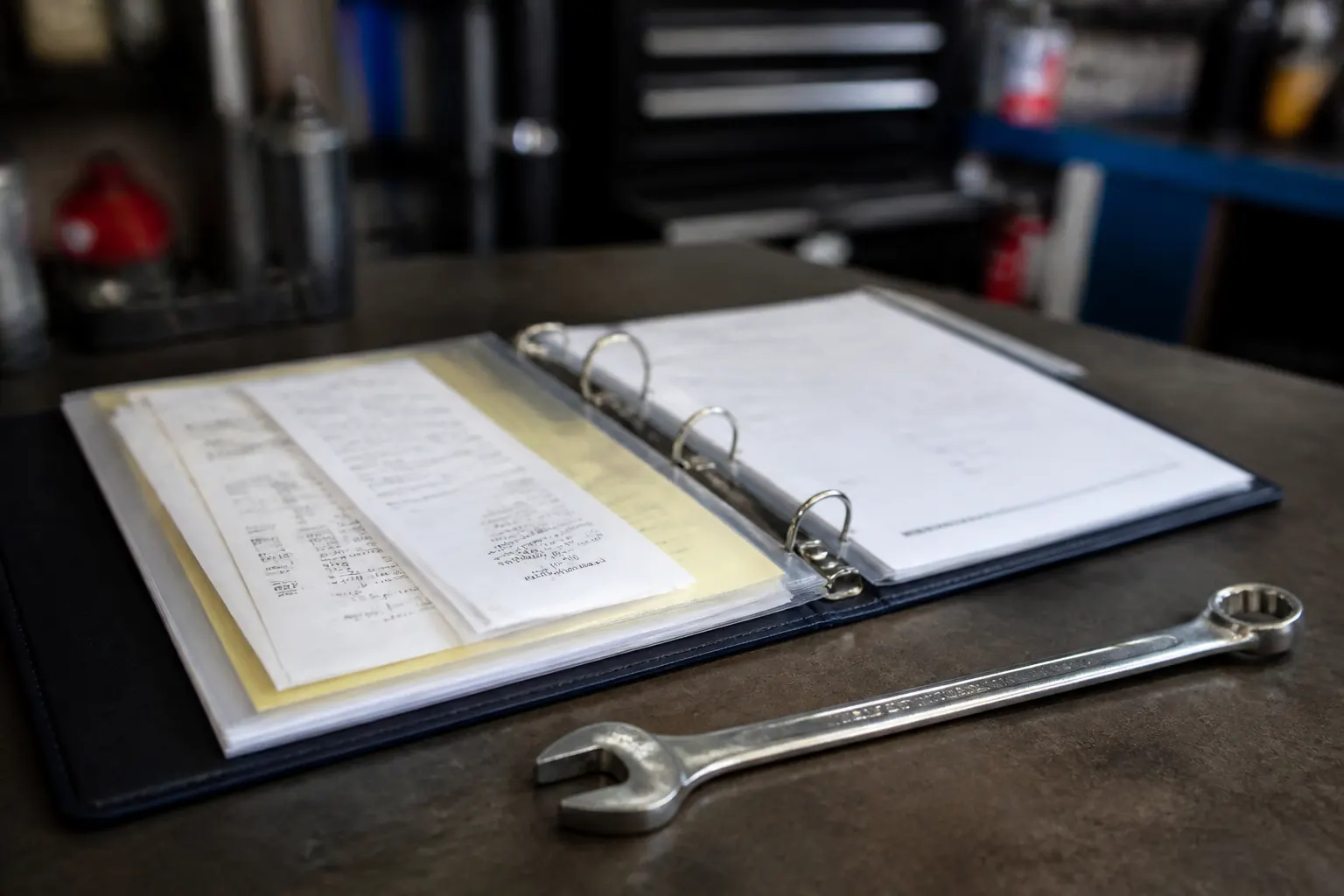
If you take only one thing from this site, take this: the most common reason extended warranty claims get denied is not the part that failed. It's the lack of documentation showing the vehicle was maintained. Adjusters are trained to ask for service records on any major claim, and "I'm sure I changed it" is not an answer that gets your transmission rebuilt.
Why this is the #1 denial reason

Every service contract I've ever read requires the owner to follow the manufacturer's recommended maintenance schedule. That's not a suggestion — it's a contractual obligation. When a claim is filed, the administrator can request proof that the maintenance was performed on time. If you can't produce it, they can deny on the grounds that the failure may have resulted from missed maintenance, even if it almost certainly didn't.
This is the single biggest gap between how people think extended warranties work and how they actually work. The contract isn't paying you because something broke. It's paying you because something broke and you did everything you were supposed to do.
Exactly what to keep
For every service event — oil change, tire rotation, brake job, transmission service, coolant flush — keep a record that includes:
- The date of service
- The exact mileage
- The vehicle identification number (VIN)
- The shop's name, address, and phone number
- A line-item description of the service performed
- The parts and fluids used, with quantities
A typical itemized invoice from a chain like Jiffy Lube, Valvoline, or your dealer service department has all of this on it. A handwritten ticket from a small independent shop usually does too. What doesn't count: a credit card statement showing a charge at an auto-parts store. That proves you bought something, not that it was installed correctly in your car.
If you do your own maintenance
Doing your own oil changes is fine — most contracts explicitly allow it — but the record-keeping bar is higher. Keep the receipt for the oil and the filter, write the date and mileage on the receipt at the time of the change, and keep the old filter in a labeled bag for at least one service interval. If a claim is ever disputed, having the old filter (with your handwriting on the bag) is unusually persuasive evidence.
Some administrators ask DIY owners to provide additional documentation — photos of the drain plug after the change, the dipstick after refilling, the new filter installed. That sounds excessive until you're sitting across from an adjuster who is looking for any reason to deny.
A simple digital system

You don't need an app. A folder on your phone called "Car Records" with one photo of every service receipt is enough. Take the photo at the shop before you leave. If you do your own work, take a photo of the receipt with the dated mileage written on it. That's the entire system.
If you want to be slightly more organized, a spreadsheet with date, mileage, service performed, and a hyperlink or filename for the receipt photo gives you a one-page summary you can hand to an adjuster. Most adjusters will not insist on this, but if you ever have a major claim, having it ready cuts approval time from days to hours.
What happens when you submit a claim
When the shop calls in your claim, the adjuster pulls up your contract and checks your service history if it's something they already have on file. For minor claims (a sensor, a small electrical component), they often approve without asking for records. For major claims — anything north of a few thousand dollars — they almost always ask. You'll be told the claim is "pending documentation."
At that point, you have a window (usually 30 days) to submit the records. If you have the folder ready, you upload everything that night and the claim usually moves to approval within a week. If you don't, you spend three weeks trying to recover records from shops you don't remember visiting, often unsuccessfully, while the repair sits paused. That is exactly the scenario the documentation prevents.
From the shop floor: the customer who saved a $5,800 claim with a shoebox
One of the cleanest claim approvals I've ever seen was on a 2017 Sierra 1500 with 112,000 miles. Transmission shifted hard, then stopped engaging reverse, then refused to move. Total repair quote: $5,800 for a remanufactured unit plus labor.
The owner — retired teacher named Walt — pulled a literal shoebox out of his truck. Every oil change receipt going back to delivery. Every fluid service. Transmission flush at 60,000 and again at 100,000, both at independent shops, both with the fluid spec written on the receipt. The administrator's adjuster spent maybe 20 minutes reviewing the box, asked us for the diagnostic printout, and approved the claim same day.
Compare that to a Highlander owner the following month. Similar mileage, similar transmission failure, similar repair quote. He told us he changed his own oil and didn't keep receipts. "It's just oil." The administrator requested maintenance documentation, he couldn't provide any, and they denied the claim for failure to demonstrate scheduled maintenance compliance. He paid $4,900 out of pocket.
The difference between those two outcomes wasn't the truck, the failure, or even how the maintenance was actually performed. Both owners probably maintained their vehicles fine. The difference was documentation. The shoebox is undefeated in my experience — a folder, a Google Drive, a glove-box envelope. Pick a system and use it. The day you need it, it's worth more per pound than anything else in the vehicle.
Key takeaways
- Missing maintenance records is the #1 reason large warranty claims get denied.
- Every service receipt needs date, mileage, VIN, shop info, and itemized work.
- DIY oil changes are allowed by most contracts, but the documentation bar is higher.
- A phone folder of receipt photos is enough — you don't need a dedicated app.
Frequently asked questions
- What if I lost some old service records?
- Most national chains and dealers can re-print receipts going back several years from your phone number or VIN. Call them before you assume the records are gone.
- Does the dealer have to do the maintenance?
- No. Federal law (Magnuson-Moss Warranty Act) prevents the contract from requiring dealer service unless the dealer is performing the work for free. Any licensed shop is fine.
- How far back do they look?
- Usually since you've owned the vehicle, or since the contract started, whichever is later. Records from previous owners help but aren't usually required.
References & further reading
Continue reading
Related guides

Why Extended Warranty Claims Get Denied (And How to Avoid It)
Most claim denials trace back to one of seven causes. Here's the list — and how to get ahead of every one of them before you ever file a claim.
8 min read · Updated 18 Jun 2026

How to File an Extended Warranty Claim Without Losing Your Mind
Most claims get paid. The ones that don't usually went sideways in the first 24 hours. Here's how to keep that from being your story.
8 min read · Updated 17 Jun 2026

Your Warranty Claim Got Denied. Here's What Actually Works.
A denied claim isn't the end of the road. It's the start of a process — and most appeals succeed when the customer follows the right steps in the right order.
8 min read · Updated 16 Jun 2026