Claims
OEM vs Aftermarket Parts: What Your Warranty Will Actually Install
If you expected genuine factory parts on every repair, read the parts clause. Most contracts default to aftermarket or remanufactured.

By Marcus Hale
Published 12 June 2026 · Updated 25 June 2026 · 6 min read
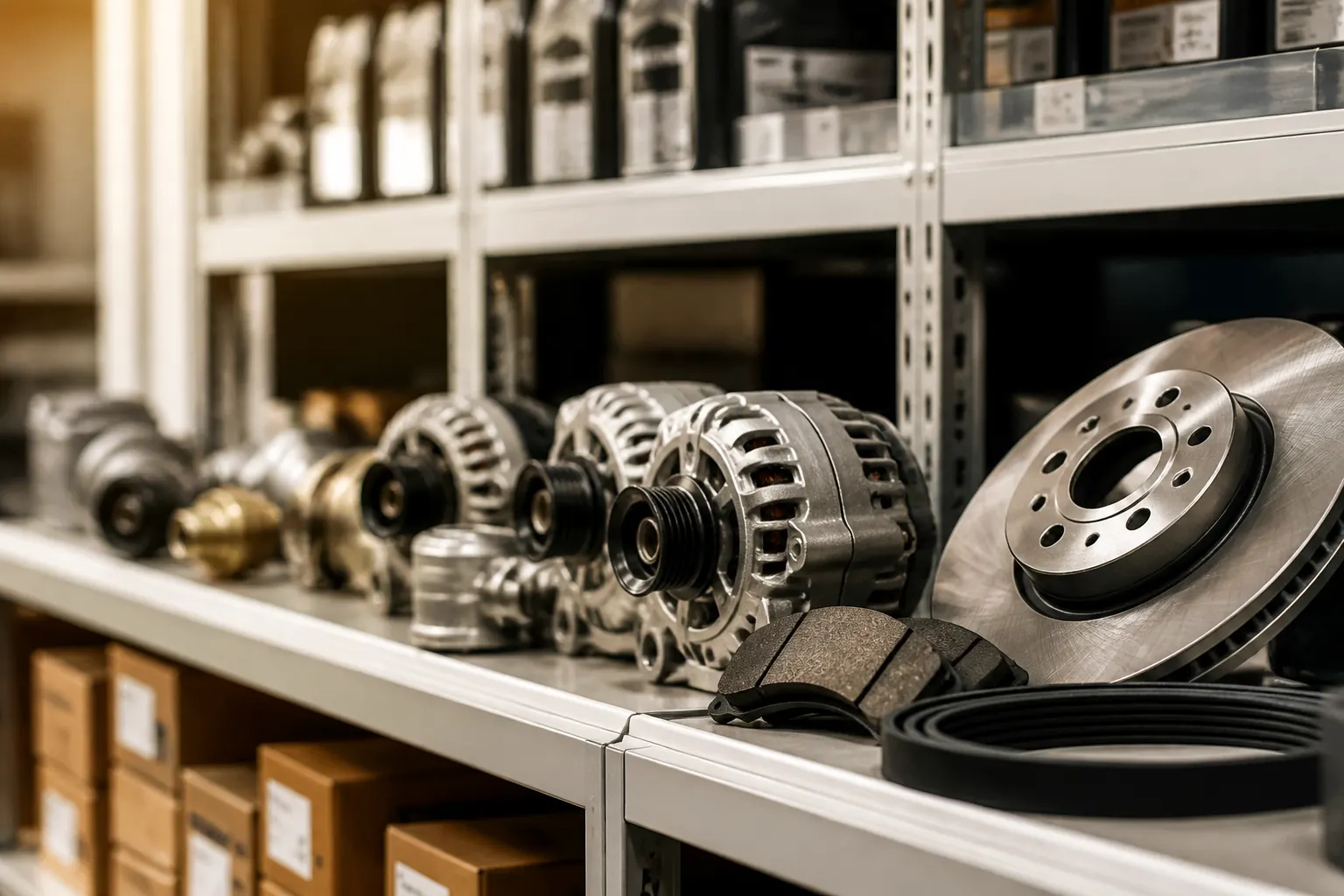
Most extended warranties use language like "parts of like kind and quality" or "LKQ" rather than promising original equipment manufacturer (OEM) parts. It's not hidden — it's right in the parts clause — but it surprises customers at claim time.
LKQ explained

LKQ means the administrator can install: new aftermarket parts from a reputable supplier, remanufactured (factory-rebuilt) parts, or used parts of comparable condition. For most components — alternators, starters, AC compressors, water pumps — a reputable remanufactured part is functionally identical to OEM at half the cost. For body and trim parts, aftermarket quality varies more.
When the difference matters
For wear components, LKQ is usually fine. For drivetrain components on luxury or performance cars, OEM matters more — aftermarket transmissions and turbochargers sometimes have shorter service lives than the originals. If you're driving a German performance car, ask whether your contract guarantees OEM for major drivetrain repairs (a few premium plans do).
Paying the difference for OEM

Most administrators will install OEM if you pay the parts cost difference. The labor is still covered. On a $1,200 reman alternator vs a $2,100 OEM, you'd pay the $900 gap and the warranty pays everything else. Decide before authorizing the repair, not after.
Shop floor: the Volvo headlight that became a battle
We had a 2017 Volvo XC60 come in with a failed adaptive headlight module — the LED matrix that bends with steering input. OEM replacement was $1,820. The customer's third-party warranty approved the claim but specified 'LKQ or aftermarket equivalent.' Problem: nobody makes an aftermarket equivalent. The function only exists as an OEM Volvo part with proprietary software. The administrator wanted to send us a used module from a salvage car with 90,000 miles on it.
I called the administrator and explained that the used module would need to be coded to the car's VIN, which Volvo's diagnostic system might refuse to do on a part it didn't recognize as new. They didn't care — their contract specified LKQ acceptable. The customer was on the hook for the difference if he wanted new. I walked him through his contract's appeal process and helped him document why the LKQ option wasn't functionally equivalent. The administrator eventually agreed to cover the OEM part at a negotiated discount, but it took three weeks and two phone calls from the shop confirming the technical issue.
The lesson: on modern vehicles, especially European and luxury, 'aftermarket equivalent' often doesn't exist for electronic modules. If your contract allows LKQ or aftermarket, you may be fighting this battle. Before you sign, check whether your contract has an OEM parts upgrade option (usually $200-400 extra) — on a complex vehicle, it pays for itself the first time you need a module replacement.
Key takeaways
- Most contracts default to LKQ parts: aftermarket, remanufactured, or used.
- Reman parts are usually fine for routine components; OEM matters more on drivetrain repairs.
- You can typically upgrade to OEM by paying the parts price difference.
Frequently asked questions
- Will aftermarket parts void anything?
- No, parts installed under the warranty by an authorized shop don't void coverage.
- Do reman parts come with their own warranty?
- Yes, typically 12-24 months from the parts supplier, sometimes longer.
References & further reading
Continue reading
Related guides

Why Extended Warranty Claims Get Denied (And How to Avoid It)
Most claim denials trace back to one of seven causes. Here's the list — and how to get ahead of every one of them before you ever file a claim.
8 min read · Updated 18 Jun 2026

How to File an Extended Warranty Claim Without Losing Your Mind
Most claims get paid. The ones that don't usually went sideways in the first 24 hours. Here's how to keep that from being your story.
8 min read · Updated 17 Jun 2026

Your Warranty Claim Got Denied. Here's What Actually Works.
A denied claim isn't the end of the road. It's the start of a process — and most appeals succeed when the customer follows the right steps in the right order.
8 min read · Updated 16 Jun 2026