Buying
Extended Warranty Scams: Red Flags to Watch For
Robocalls, urgency tactics, vague company names — here's exactly how to spot a warranty scam before you give them a card number.

By Marcus Hale
Published 11 April 2026 · Updated 24 June 2026 · 7 min read
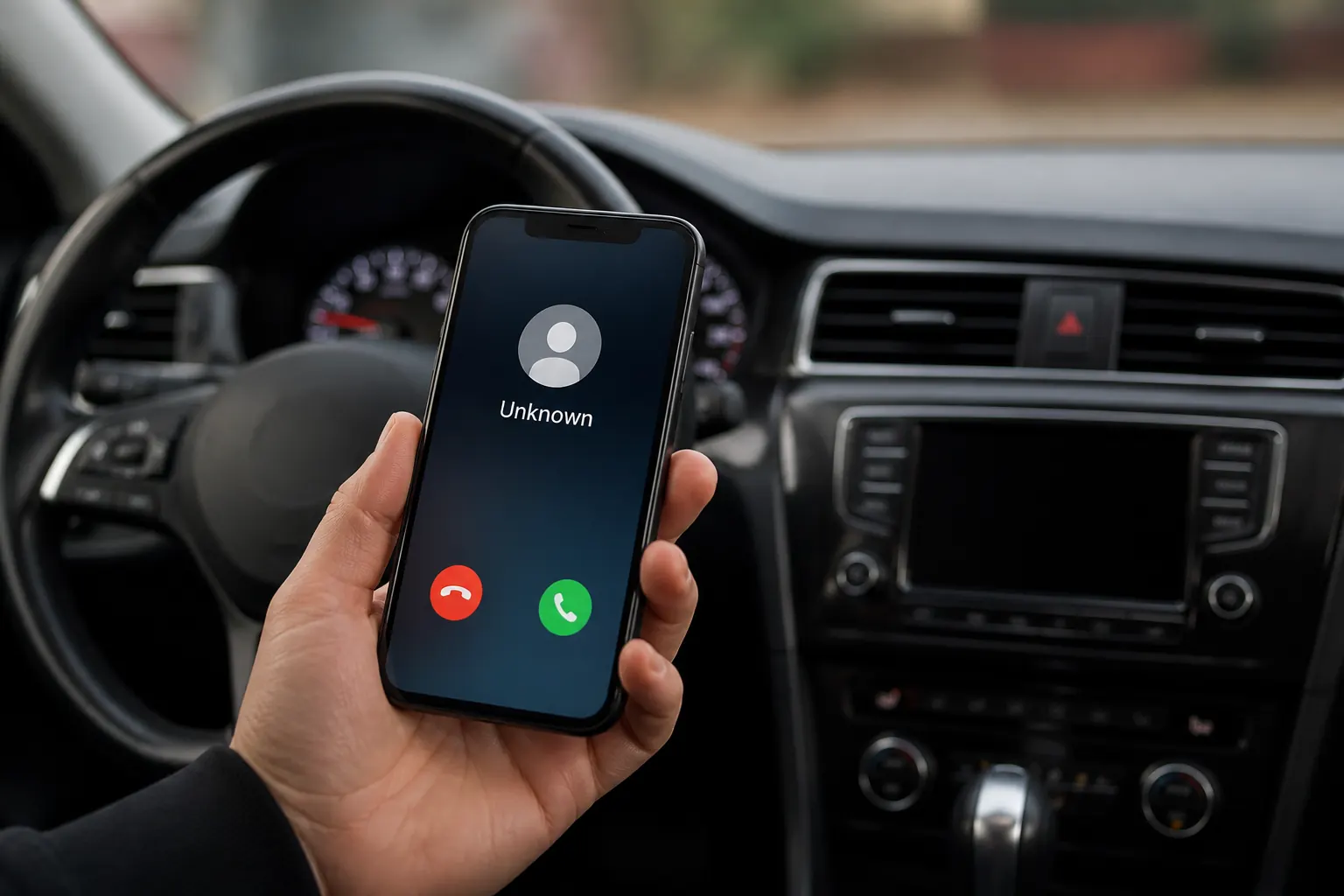
"We've been trying to reach you about your car's extended warranty" is one of the most-mocked phrases in modern American life for a reason. The robocalls don't come from a real warranty provider — they come from outbound call centers that buy lead lists and sell low-value service contracts at high prices, often misrepresenting what's actually covered. Knowing how to spot the pattern protects your wallet and your credit card.
The infamous warranty robocall

Here's the standard script: a recorded voice claims your vehicle's "factory warranty is about to expire" and instructs you to "press 1 to speak with a representative." If you press, you're routed to a high-pressure salesperson who already has some of your information (often just your name and the make of your car, pulled from a public records purchase) and tries to close on a $3,000 to $5,000 "warranty" within the call.
Real warranty providers don't do this. Manufacturers don't cold-call you about extended coverage. Reputable third-party administrators don't either. The robocall industry is its own thing, and the products it sells are routinely junk.
Seven red flags
If two or more of these apply, stop the conversation:
1. They called you. Cold outbound calls about warranty coverage are almost always a scam.
2. They claim to know your car details but won't say where they got them. "I see here your 2019 Honda is approaching warranty expiration..." with no explanation of how they have that record.
3. The company name is vague. "Vehicle Protection Services," "National Auto Coverage," "Endurance Auto Warranty Protection" (deliberately confusable with a real provider). Real administrators have specific, searchable names.
4. They won't email you the contract before you pay. Every legitimate provider will send the full sample contract for review. If they refuse, walk away.
5. They use urgency. "This price is only good today." "If you don't sign by tonight, your file closes." Real coverage doesn't have a deadline.
6. They take payment by gift card, wire transfer, or instant ACH. Legitimate providers take credit cards. Any push toward irrevocable payment methods is a scam.
7. The price is suspiciously low. A $1,200 "bumper-to-bumper" plan on a 7-year-old BMW is not real coverage. The premium has to match the expected loss; if it doesn't, the coverage isn't.
What they're actually selling
When scam operators do sell a real product, it's usually a stripped-down stated-component contract from a small, lightly-regulated administrator. The schedule of covered components is short, the exclusions are broad, and the claim approval rate is low.
The marketing materials describe it as "bumper-to-bumper" or "comprehensive coverage" but the contract is something else entirely. By the time you read the schedule, your card has been charged and you're inside the cancellation window's countdown.
What to do if you already paid

If you paid by credit card and you're within the cancellation window (most states require a free-look period of 20 to 30 days), call the provider, demand cancellation in writing, and request a full refund. If they refuse or stall, file a chargeback with your credit card company. Federal credit card protections are strong here — provide the recorded sales call (request it from them; many states require they have it on file), the contract, and any evidence of misrepresentation.
Also file complaints with your state insurance commissioner (most warranty administrators are regulated as insurance), the Federal Trade Commission, and the Better Business Bureau. The state insurance commissioner is the one with actual regulatory teeth.
How to find a legitimate provider
The reputable third-party administrators in 2026 are a relatively short list: Endurance, CARCHEX, Olive, Concord, ForeverCar, Toco. None of them rely on outbound robocalls. They have websites with sample contracts, transparent pricing structures, BBB ratings (check for actual A or A+ with substantial review counts, not just an unrated listing), and they accept credit cards.
You can also get coverage through your auto insurance carrier (Geico offers mechanical breakdown insurance, for example), your credit union, or the manufacturer's own extended program. None of these will ever cold-call you. If you want extended coverage, you go to them — not the other way around.
Shop floor: the postcard that sent a customer scrambling
An older customer named Frank came in one morning with a folded postcard that said 'FINAL NOTICE: Your factory warranty is about to expire.' It had his name, his address, the make and model of his truck, and a toll-free number. He'd called the number and a friendly rep had walked him through a $3,400 plan he could put on a credit card right then. He wanted me to look it over before he 'finalized' it.
Three red flags hit me before I'd read past the cover page. First, the company name on the postcard wasn't the company name on the contract — the postcard was a marketing front and the actual administrator was a different LLC I didn't recognize. Second, the contract had no specific list of covered components; it referenced 'Plan B' coverage with the actual schedule available 'upon request after enrollment.' Third, the cancellation clause hidden on page seven had a 30-day window but required cancellation by certified mail to a P.O. box in a state Frank had never been to.
I told him to walk away and showed him how to look up the administrator's A.M. Best rating (there wasn't one) and the BBB profile (200+ complaints, mostly about denied claims and refund stonewalling). He'd been hours away from putting $3,400 on a card with a company that would have likely been unreachable when he needed them. The lesson I give everyone now: if the pitch arrived unsolicited, if the company name is generic, and if you can't read the full coverage schedule before you pay, the answer is no. Real warranty companies don't need to pressure you on a phone call.
Key takeaways
- Real warranty providers don't cold-call you — robocalls are a scam pattern.
- Vague company names, urgency, and gift-card payment are the clearest red flags.
- Scam plans cover little and deny most claims, despite 'comprehensive' marketing.
- Credit card chargebacks are your best recovery path if you've already paid.
Frequently asked questions
- How do scammers get my car's information?
- Public records — vehicle registration data is sold by some state DMVs and aggregated by data brokers. They also buy lead lists from former dealer customers.
- Can I stop the robocalls?
- Partially. Register on the National Do Not Call Registry, use carrier-level call screening (Verizon, AT&T, T-Mobile all offer free tools), and never press any number in response to a robocall — it confirms your line is active.
- Is Endurance Auto Warranty a scam?
- Endurance is a legitimate administrator with a long history. There are also many fake operators using confusingly similar names. Verify you're on the real endurancewarranty.com, not a lookalike.
References & further reading
Continue reading
Related guides

When an Extended Car Warranty Is Worth It (And When to Walk Away)
Extended coverage genuinely pays off in a narrow set of situations. Here's the framework I use to decide, plus the scripts for declining at the F&I desk.
8 min read · Updated 10 Jun 2026

Should You Buy an Extended Warranty at the Dealership? (Usually Not)
The dealer isn't the only place that sells coverage on your car, and it's almost never the cheapest. Here's how to tell when their offer is worth taking anyway.
8 min read · Updated 13 Jun 2026
CARCHEX vs Olive: Broker vs Direct, and Why It Matters
Two reputable names that operate completely different business models. The right choice depends less on the brand than on how you prefer to shop.
7 min read · Updated 22 Jun 2026